All Categories
Featured
Table of Contents
Here are the crucial elements to consist of in your business plan summary: Believe of the executive summary as your elevator pitch a concise company introduction capturing the essence of your plan. Craft a concise and compelling business introduction, highlighting your: Purpose. Target market.
Products or services and their distinct selling points and advantages. Legal structure, ownership, and operational area. Conduct an extensive analysis of your target audience. Assess the market landscape, recognizing your target audience, its size, demographics, requirements, and purchasing behaviors. Examine your competitors, their strengths and weak points, and how you will separate.
Assess market patterns, possible risks and opportunities. Conventional plans include a marketing plan with information on marketing channels and rates methods. Outline methods for reaching your target market and promoting your offerings. Define your marketing channels (like social networks, e-mail, or marketing). Outline marketing and sales methods. Define your prices method and how it aligns with your worth proposition.
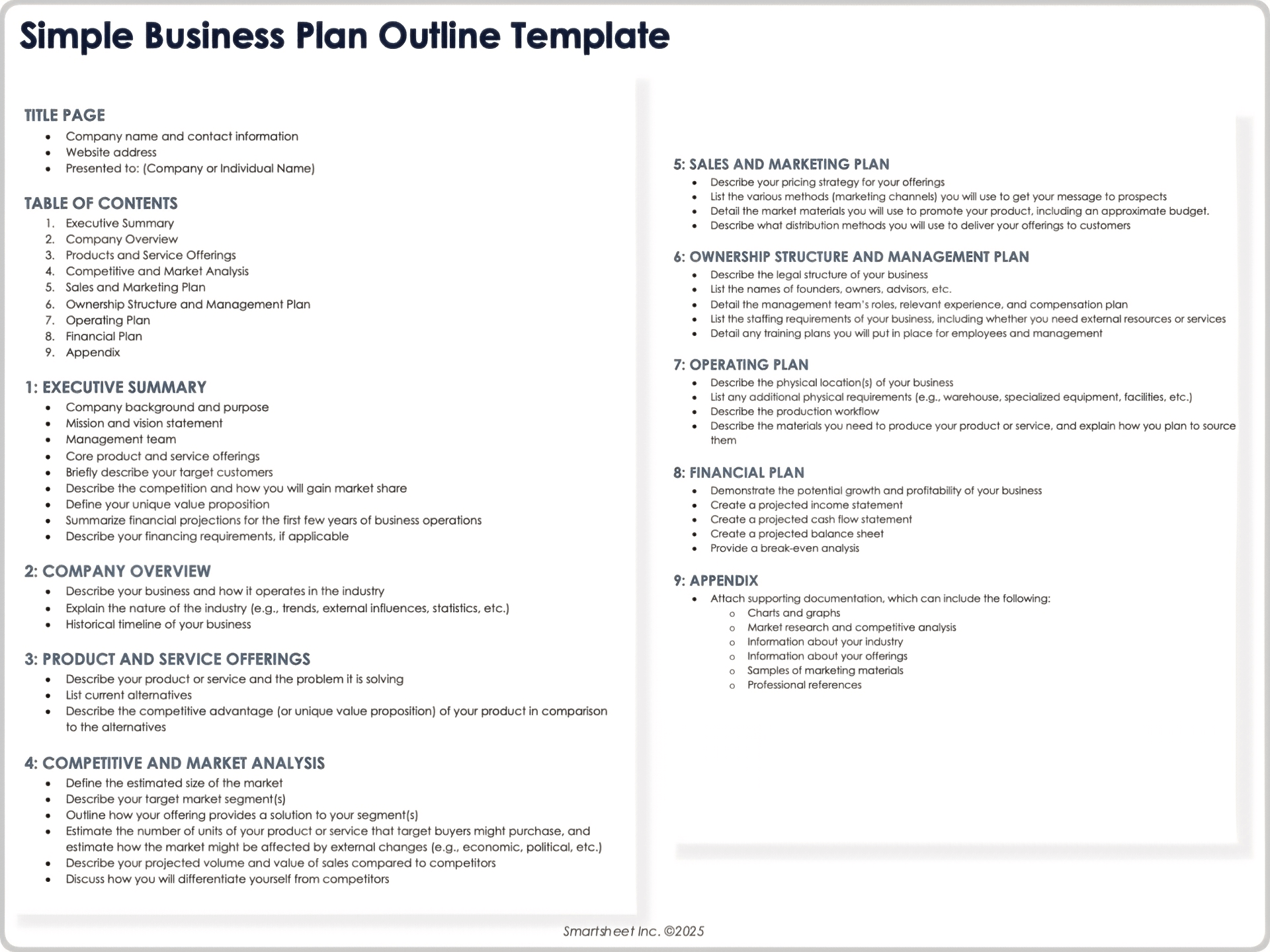
Highlight their roles and duties, showcasing their strengths and certifications. Stress their certifications and ability to execute your plan. Construct trust and self-confidence in your leadership's ability to execute your plan. Develop realistic financial strategies and forecasts for the next numerous years, including profits streams, costs, and profitability. Anticipate your monetary performance for the next 3-5 years, consisting of revenue streams, expenses and revenues.
Show the monetary viability of your service and potential for return on investment. Include supporting files to provide extra context and reinforce the credibility of your organization strategy: Marketing research reports. Rival analysis data. In-depth financial designs. Funding request: If you're seeking lending institution or financier assistance, plainly mention the amount asked for and how it will be utilized.

Winning Business Plan Templates for 2026
Compared to a standard service strategy, a lean company strategy is a one-page organization strategy focused on experimentation, version and knowing. Here are the crucial elements to include in your lean start-up business strategy: Clearly articulate the specific problem your service fixes in such a way that resonates with your target audience.
Describe how your option stands apart from existing options and why it's the much better option. Concentrate on your value proposal: Why should customers select you over existing options? Explain the a lot of basic version of your product and services your minimum practical product that can be evaluated with genuine customers. Don't get bogged down in a feature-packed MVP.
Get feedback from early adopters to validate your presumptions and repeat rapidly. Define your ideal client segments, including demographics, requirements and discomfort points.
Strategic Startup Naming Tips in 2026
Outline your preliminary channels and methods for reaching your target audience. Choose particular metrics to track your customer validation process. Specify essential knowing objectives to assess your development. Outline your client validation techniques, including metrics and essential knowing goals. Explain your preliminary channels and tactics for customer acquisition and growth.
Focus on efficient channels and methods for target client acquisition. Focus on traction and gaining a grip in the market rather than comprehensive marketing and sales strategies.
Note the tools required to support operations. Don't get bogged down in detailed financial plans or modeling at this stage.
Use these forecasts to track progress, make notified choices, and draw in investors. Produce a clear roadmap for MVP development, customer recognition and market launch. Outline a roadmap that consists of milestones and deadlines for each stage of development, recognition and launch. Break down the plan into manageable tasks to preserve momentum and track development.
Legal Requirements for Opening An LLC This Year
Whether you're choosing standard or lean, follow these actions for producing an effective business strategy: The very first (and most important) action is to comprehend the audience and identify your goals. Identify whether you'll require a conventional or lean strategy, so you can tailor your material and structure. Draw in investors, secure loans, or guide internal operations.
Understanding your objectives is important to developing a great organization plan that aligns with your goals and sets a clear course for success. Optimize your organization planning efforts by conducting comprehensive research study. Start by collecting all of the appropriate data and information that will form your business strategy outline, including market research study, competitor analysis, and monetary projections.

Latest Posts
Anticipating Consumer Behavior with Data Strategy Tools in 2026
Anticipating Consumer Behavior with Data Strategy Tools in 2026
Modern Strategies for Identification in 2026